Google AFS Requirements are crucial for any publisher who wants to activate and maintain Google AdSense for Search (AFS). While AFS offers excellent opportunities to monetize on-site search traffic, Google maintains strict eligibility standards to ensure quality and compliance. This guide breaks down everything you need to know about Google AFS Requirements in 2026.
Why Google AFS Requirements Matter
Google AdSense for Search (AFS) lets you add a powerful search box to your website and earn revenue from targeted Search and Shopping ads displayed on the results pages. However, access is not automatic. Meeting the official requirements helps you get approved faster and avoid account issues later. Understanding these criteria is the first step toward successfully adding AFS as a high-intent revenue stream.
Key Google AFS Requirements in 2026
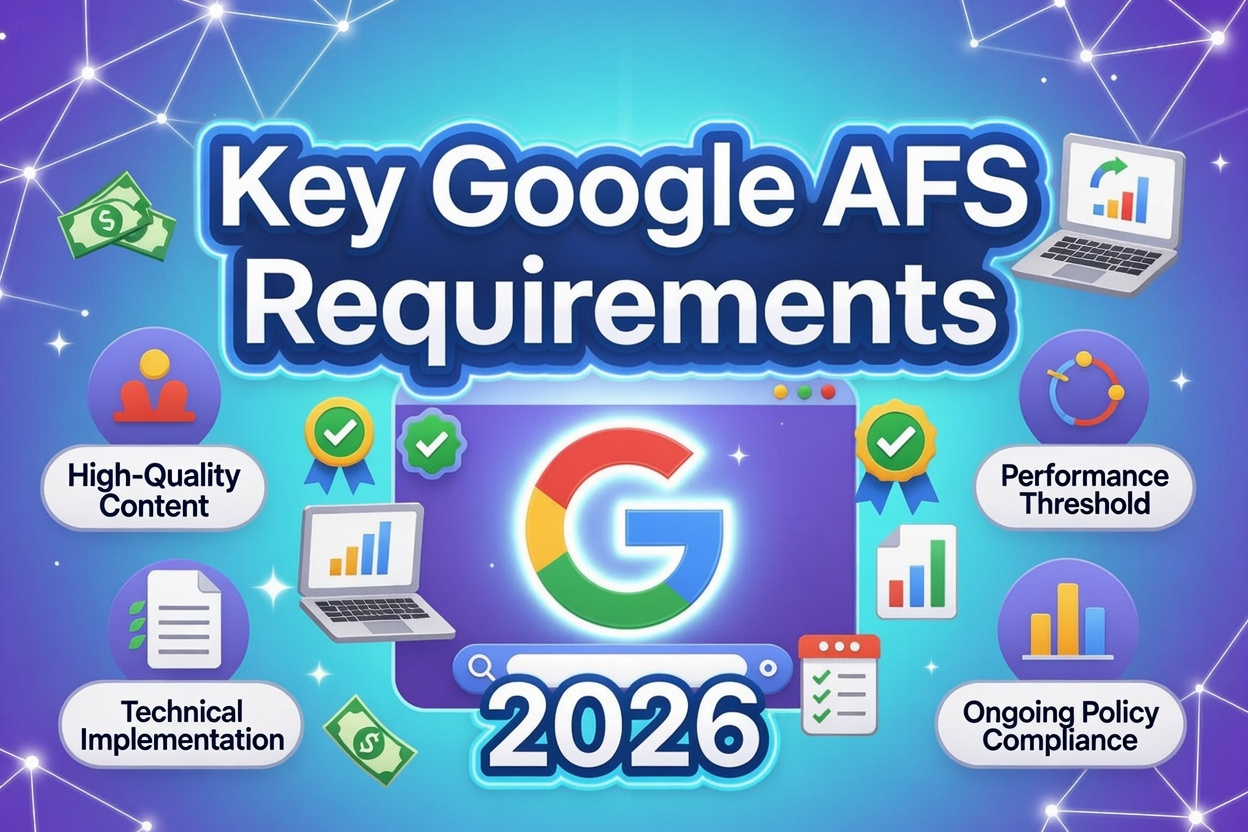
In 2026, successfully activating and maintaining Google AdSense for Search (AFS) requires meeting several important criteria set by Google. These requirements ensure that only quality websites with genuine user engagement and strong policy compliance can access this monetization feature. Below are the main Google AFS Requirements explained in detail.
- An Active and Compliant AdSense Account
You must already have an approved Google AdSense for Content account in good standing. AFS is not a separate program — it is an add-on feature. New or restricted accounts usually need to prove compliance with standard AdSense policies before applying for AFS. This prerequisite ensures that only publishers who understand and follow Google’s advertising rules can access the search monetization tool. If your main AdSense account has recent violations, warnings, or low performance, Google will likely reject your AFS application until these issues are resolved.
- High-Quality Website and Content
Your site must meet Google’s strict content and user experience standards. This includes having original, valuable, and well-written content with no thin or duplicate pages. Your design should be clean, with fast loading speeds and full mobile responsiveness. Additionally, the site must have no violations of AdSense policies, such as prohibited content, excessive ads, or poor navigation. Finally, it should feature a functional internal search tool that users actually engage with. These standards help Google ensure that AFS is implemented on trustworthy, user-friendly websites that deliver real value to visitors.
- Performance Threshold for Continued Access
To ensure long-term stability and maintain a highly engaged search environment, specialized optimization models are highly beneficial. For instance, when routing your ad stack through premium collaborative platforms like AdsCollab, we actively monitor account traction to safeguard your system from being flagged for inactivity by Google. We strongly advise maintaining an optimized layout that safely aims for a baseline of at least 20 Search ad impressions across consecutive active months. This proactive measure prevents automated ad serving deprecation due to stagnant or underused internal tools.
- Technical Implementation Readiness
You need the ability to properly integrate the AFS code on your website. This involves placing and customizing the search box to match your site’s branding, styling the search results page in a professional and consistent manner, and ensuring full compatibility with mobile devices and Progressive Web Apps (PWAs). Technical readiness is essential because a poorly implemented search experience can hurt user satisfaction and lead to lower engagement, which ultimately affects both revenue and compliance with Google’s quality guidelines.
- Ongoing Policy Compliance
After activation, you must maintain full compliance at all times. This includes clearly labeling all ads as “Sponsored,” avoiding any form of click manipulation or invalid traffic, and delivering a positive user experience on the search results pages. Ongoing compliance is monitored continuously by Google, and violations can result in immediate suspension of AFS or the entire AdSense account. Publishers who treat policy adherence as a long-term priority tend to enjoy stable access and better long-term performance.
How to Apply for Google AFS
Applying for Google AdSense for Search (AFS) is relatively straightforward once your website meets the basic requirements. However, following the correct steps and preparing your site properly can significantly improve your chances of quick approval. The process involves several clear stages, from logging into your account to implementing the code and monitoring performance.
The first step is to log into your existing Google AdSense account. Make sure your primary AdSense for Content account is active, in good standing, and has no recent policy violations or restrictions. This is essential because AFS is an add-on feature and Google will check the health of your main account before considering your request.
Next, contact your assigned account manager (if you have one) or submit a formal request for AdSense for Search directly through the AdSense dashboard. Provide necessary details about your website and clearly explain how you plan to use the search functionality. Submitting a well-prepared request can help speed up the approval process.
After submitting your application, wait for Google’s review. The review process typically takes several days to a few weeks, depending on Google’s workload and the overall quality of your site. During this time, it is recommended to continue improving your content and user experience to strengthen your application.
Once approved, you can implement the AFS code on your website. Place and customize the search box to match your branding, style the results page professionally, and ensure it works smoothly on both desktop and mobile devices. Finally, monitor performance regularly through your AdSense reports to maintain the required impression thresholds and maximize revenue.
Pro Tips to Meet Google AFS Requirements Successfully
Meeting Google AFS Requirements is much easier when you take a strategic approach to your website and content strategy. While the official criteria focus on account status, content quality, and performance, applying the following practical tips can significantly increase your chances of approval and help you maintain long-term access to AFS in 2026.
- Focus on high-intent niches such as finance, insurance, legal, real estate, or product reviews.
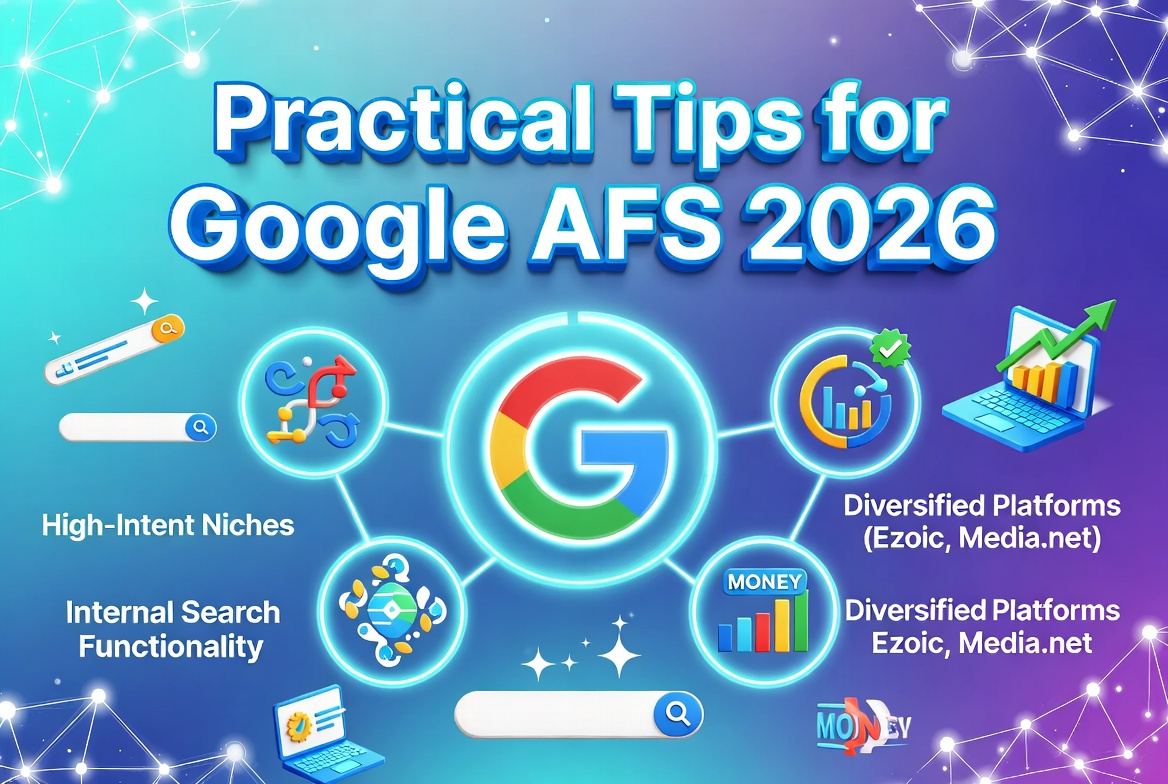
Targeting high-intent niches is one of the most effective ways to succeed with Google AFS. Niches like finance, insurance, legal services, real estate, and detailed product reviews naturally attract users who are actively searching for solutions, comparisons, or specific information. These types of queries trigger stronger advertiser competition, leading to higher CPMs and better overall revenue. In 2026, content that answers specific user questions in these verticals tends to perform exceptionally well with AFS.
- Build strong internal search functionality and create content that naturally encourages searches.
A successful AFS implementation depends heavily on actual user searches. Invest time in building a robust internal search system and create comprehensive content that naturally prompts visitors to use the search box. This includes well-organized category pages, comparison guides, FAQ sections, and topic clusters. When users frequently search on your site, you generate more ad impressions, helping you easily meet Google’s performance threshold while improving overall user experience.
- Combine AFS with other platforms (e.g., Ezoic for AI optimization or header bidding solutions) for better overall revenue.
AFS works best when used as part of a diversified monetization strategy. Combining it with platforms like Ezoic (for AI-powered ad optimization), Media.net, or advanced header bidding solutions allows you to maximize revenue from multiple demand sources. This hybrid approach reduces risk, increases fill rates, and often delivers significantly higher RPMs than relying on AFS alone.
- Regularly track impressions and optimize content to maintain the required performance levels.
Consistent monitoring is essential for long-term AFS success. Use AdSense reports to track search ad impressions and identify which pages or keywords drive the most activity. Regularly optimize underperforming content, improve site navigation, and create new search-friendly articles to keep your impression numbers above the minimum threshold. Publishers who actively monitor and adjust their strategy tend to maintain stable access and achieve better revenue growth over time.
Conclusion
Meeting Google AFS Requirements in 2026 is achievable for publishers with quality content and genuine user engagement. AFS remains a valuable tool for monetizing high-intent search traffic, but success depends on preparation and ongoing compliance.
If your site struggles with traffic volume or policy hurdles, consider hybrid strategies that combine AFS with premium ad networks for stronger, more stable earnings.
Ready to activate Google AFS or need help optimizing your site for approval? Leave a comment below or reach out to the AdsCollab team for personalized monetization guidance in 2026.

