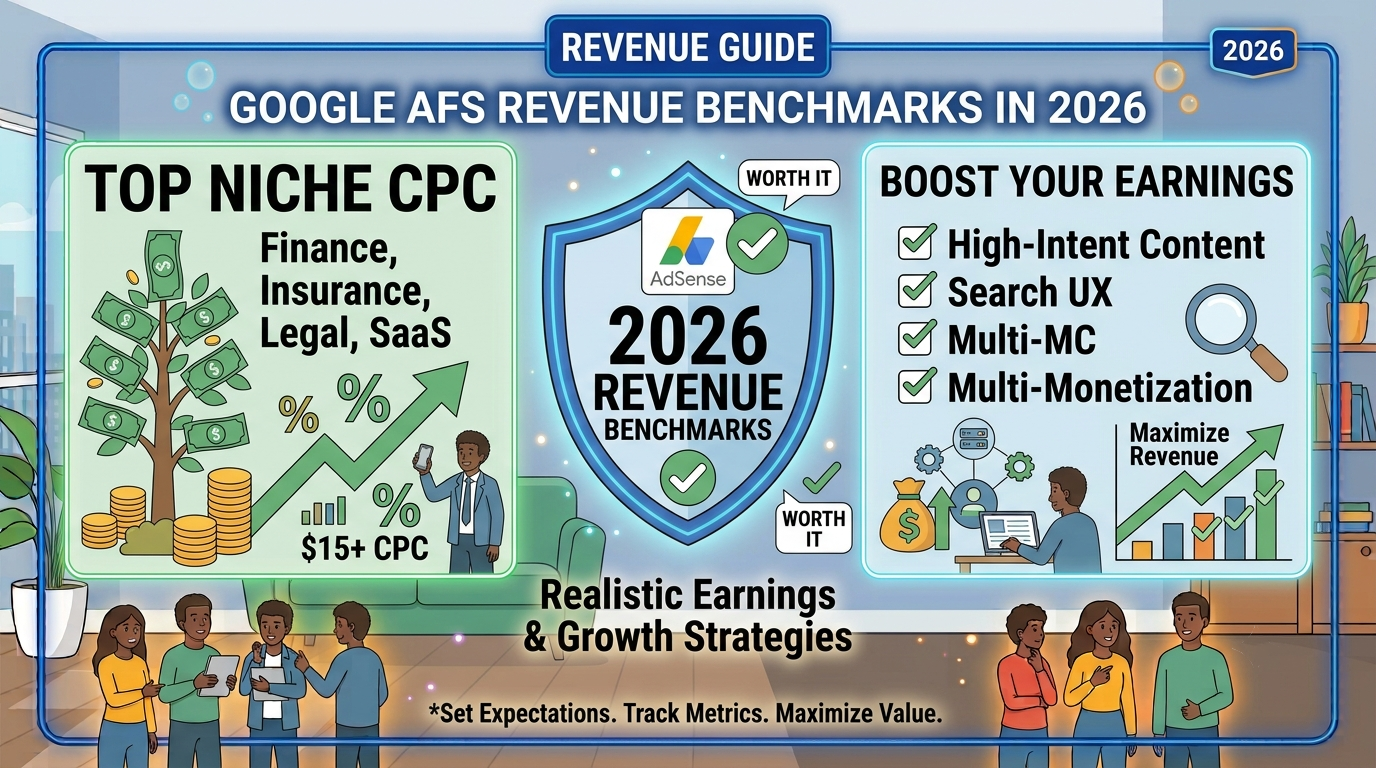
Google AFS Revenue Benchmarks are essential information for publishers considering AdSense for Search as part of their monetization strategy. While many focus on getting approved, understanding realistic earnings helps set proper expectations and optimize performance. This article breaks down current Google AFS revenue benchmarks for 2026, key factors that influence earnings, and practical tips to maximize your revenue.
What Affects Google AFS Revenue?
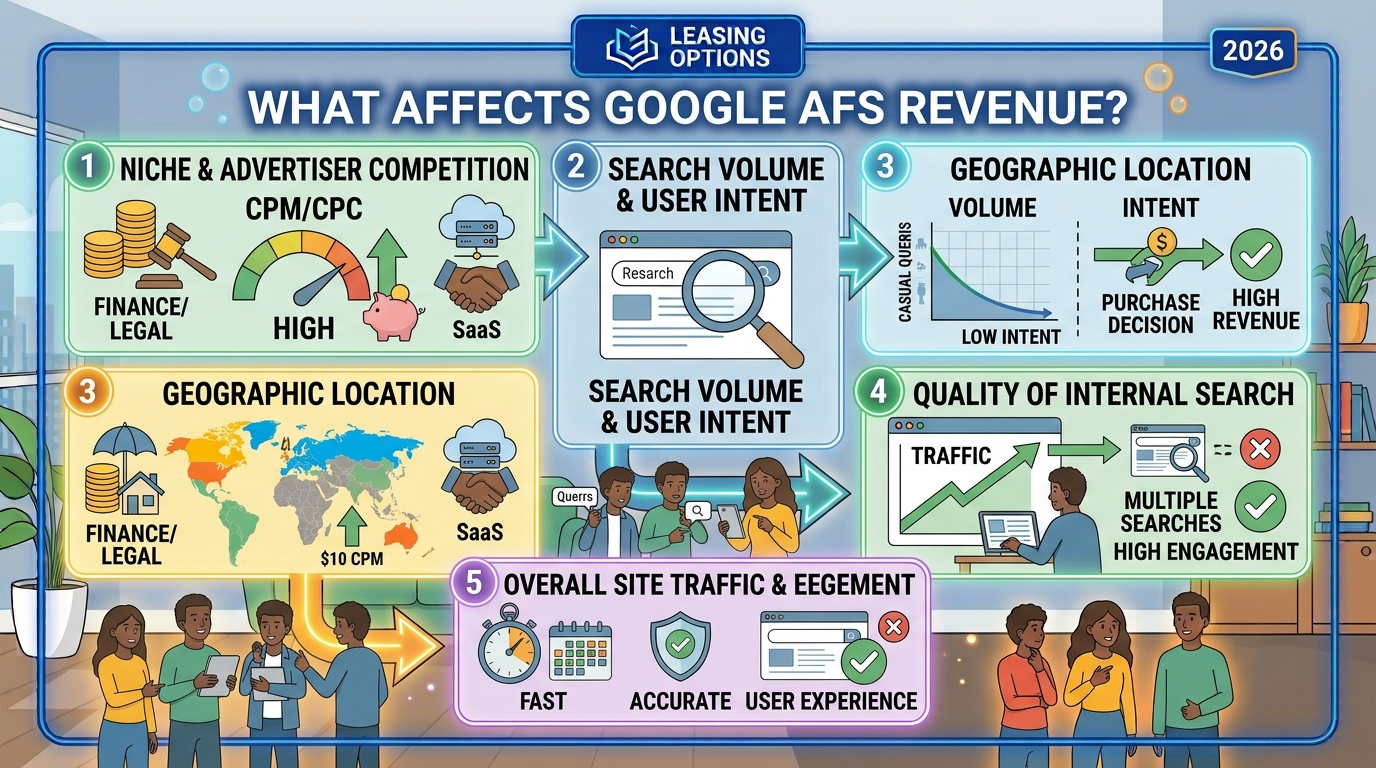
Revenue from Google AFS depends on several important factors. Unlike traditional display ads that rely mainly on pageviews, AFS earnings are directly linked to how actively and effectively users engage with the search feature on your website. Understanding these factors helps publishers set realistic expectations and focus their optimization efforts.
• Niche and advertiser competition
The niche of your website plays one of the biggest roles in determining AFS revenue. In highly competitive verticals such as finance, insurance, legal services, and SaaS, advertisers are willing to pay significantly more per click due to high customer lifetime value. This intense competition drives up CPM and CPC rates. On the other hand, general lifestyle or entertainment niches usually generate lower revenue because advertiser demand and bidding power are much weaker.
• Search volume and user intent
The number of searches performed on your site and the quality of user intent are critical drivers of revenue. High search volume alone is not enough — the intent behind those searches matters most. Users searching for specific solutions, comparisons, or purchase decisions (transactional and commercial intent) generate far higher earnings than casual or informational searches. Improving content to attract high-intent queries is one of the most effective ways to boost AFS performance.
• Geographic location of your audience
The geographic location of your visitors has a major impact on AFS earnings. Traffic from Tier-1 countries such as the United States, United Kingdom, Australia, and Canada typically delivers much higher CPMs and CPCs compared to traffic from Tier-2 and Tier-3 countries. Even within the same niche, shifting your audience toward premium geographies can dramatically increase revenue.
• Quality of your internal search implementation
How well your internal search system works directly affects user engagement and ad performance. A fast, accurate, and user-friendly search experience encourages more searches and better interaction with the results page. Poor implementation (slow loading, irrelevant results, bad design) leads to lower usage rates and reduced revenue. Investing in a quality search solution is therefore essential for maximizing AFS earnings.
• Overall site traffic and engagement
While AFS focuses on search activity, your overall site traffic and user engagement still matter. Higher total traffic usually leads to more opportunities for users to discover and use the search function. Engaged visitors who spend more time on your site are also more likely to perform multiple searches, increasing ad impressions and potential revenue.
Key Performance Metrics to Track
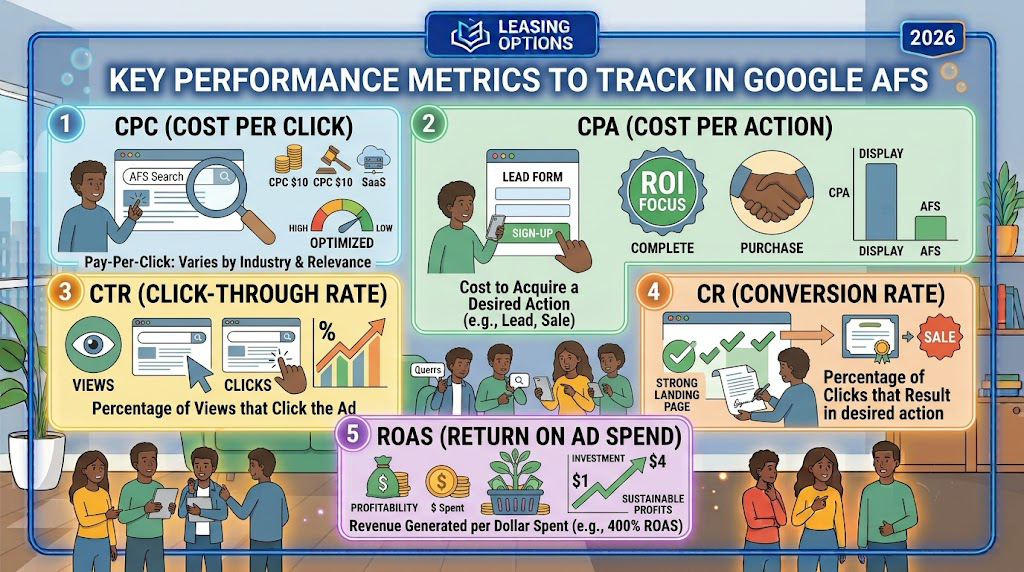
When running Google AFS, tracking the right metrics is crucial for measuring success and optimizing results. The core financial and performance indicators include:
• CPC (Cost Per Click)
CPC is the amount you pay each time someone clicks on your ad. It is one of the most important metrics in Google AFS. CPC varies significantly depending on niche competitiveness and ad relevance. High-value niches such as insurance, finance, and legal typically have much higher CPCs. Lowering CPC while maintaining quality traffic is a primary optimization goal.
• CPA (Cost Per Action)
CPA measures the average cost to acquire a desired action, such as a purchase, sign-up, or lead. This metric is especially important for advertisers because it directly relates to business ROI. Google AFS often delivers better CPA compared to display ads due to the high-intent nature of search traffic.
• CTR (Click-Through Rate)
CTR represents the percentage of people who see your ad and actually click on it. A high CTR indicates that your ads are relevant and compelling to users. AFS typically achieves higher CTRs than standard display advertising because users are actively searching for information.
• CR (Conversion Rate)
Conversion Rate is the percentage of clicks that result in a desired action. Even with high traffic and clicks, a low conversion rate means the campaign is not effective. Optimizing CR requires strong landing pages, clear calls-to-action, and alignment between user search intent and your offer.
• ROAS (Return on Ad Spend)
ROAS measures how much revenue is generated for every dollar spent on advertising. For example, a ROAS of 400% means you earn $4 in revenue for every $1 spent. This is often considered the most important overall metric because it directly shows the profitability of your advertising efforts. Most businesses aim for a minimum ROAS of 300–400% to ensure sustainable profits.
How to Maximize Your Google AFS Revenue
To achieve or exceed the revenue benchmarks mentioned above, publishers need a strategic and consistent optimization approach. Simply getting approved for AFS is not enough — ongoing improvement is key to unlocking its full potential. Here are the most effective strategies:
- Focus on high-intent niches
One of the fastest ways to increase AFS revenue is by focusing on high-intent niches such as finance, insurance, legal services, real estate, and SaaS. These industries have strong advertiser demand and high customer lifetime value, which translates into significantly higher CPC and CPM rates. Creating in-depth, solution-oriented content in these verticals attracts users with clear buying or decision-making intent, leading to better engagement and substantially higher earnings per search.
- Improve internal search relevance and user experience
The quality of your internal search directly impacts how often users search and how effectively ads are shown. Invest in a fast, accurate, and intelligent search system that delivers relevant results. Combine this with a clean, well-designed search results page that encourages users to stay and interact. A superior search experience not only increases search volume but also improves ad relevance and click-through rates, resulting in higher overall revenue.
- Combine AFS with other monetization methods
AFS performs best when used as part of a diversified strategy rather than the only monetization source. Combine it with header bidding solutions, premium ad networks (like Mediavine or Ezoic), affiliate marketing, and direct sponsorships. This hybrid approach reduces risk, fills unsold inventory more effectively, and allows you to capture revenue from multiple angles while maximizing the value of high-intent search traffic.
- Regularly analyze search queries and create targeted content
One of the smartest long-term strategies is to regularly review the actual search queries users enter on your site. Use this data to identify popular topics, gaps in content, and trending questions. Then create targeted, high-value articles and guides around these searches. This creates a positive cycle: better content drives more relevant searches, which leads to higher ad impressions and improved revenue performance.
Conclusion
Google AFS Revenue Benchmarks in 2026 show strong earning potential for publishers who optimize effectively. By understanding key metrics like CPC, CPA, CTR, CR, and ROAS, you can make data-driven decisions to grow your revenue sustainably.
If you're looking to implement AFS or improve your current performance, feel free to reach out to the AdsCollab team for expert guidance.

