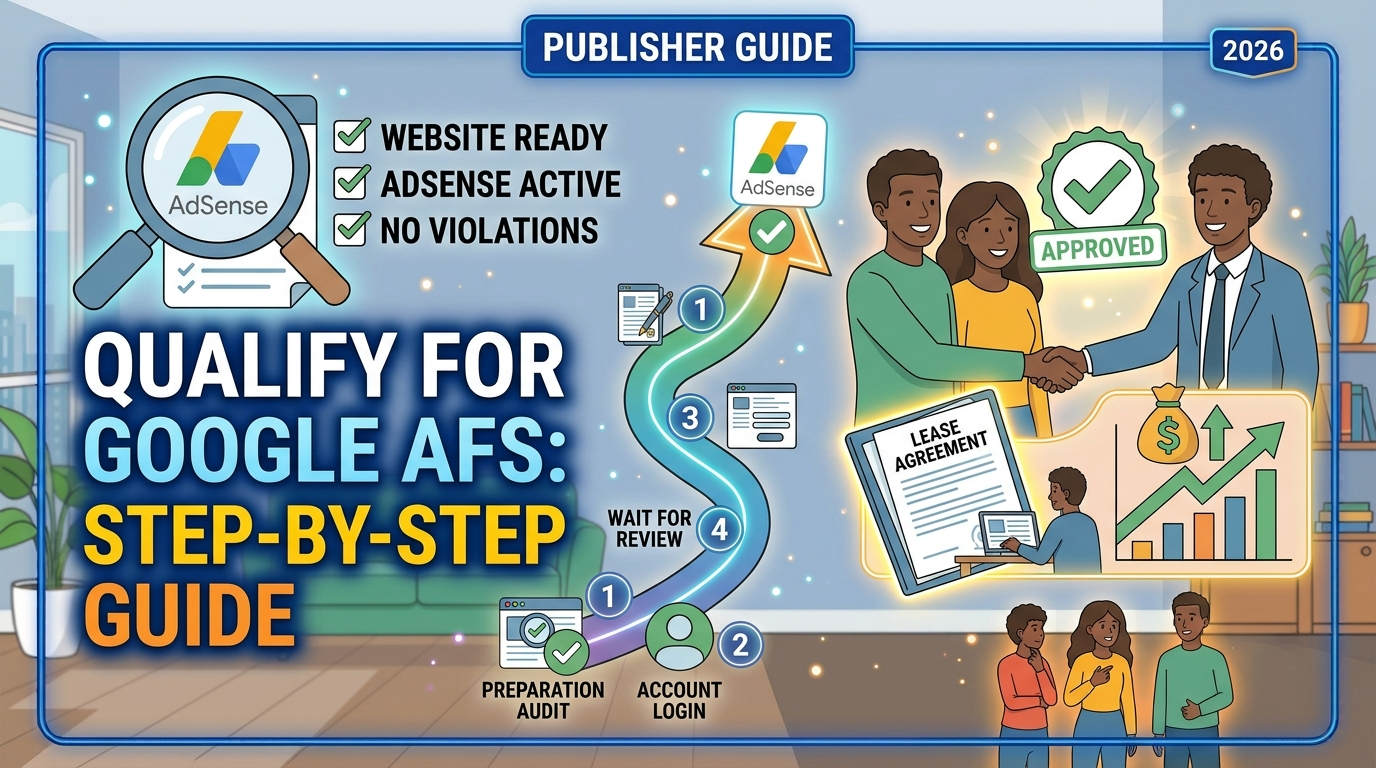
How to Qualify for Google AFS remains a hot topic among website owners and content creators who want to unlock an extra layer of revenue from on-site search. Google AdSense for Search (AFS) lets you display targeted ads on your website’s search results pages, but getting approved isn’t automatic. This guide provides a clear, practical roadmap to help you successfully qualify for AFS in 2026.
Why Qualifying for Google AFS Matters
AFS is more than just another ad format — it taps into high-intent user behavior. When visitors search directly on your site, AFS delivers relevant ads from Google’s powerful network, often resulting in better engagement and higher earnings compared to standard display ads. However, Google maintains strict standards to protect user experience and ad quality. Meeting these standards is the key to approval and long-term success.
Core Requirements to Qualify for Google AFS
Before starting the application process, make sure your site satisfies these foundational requirements:
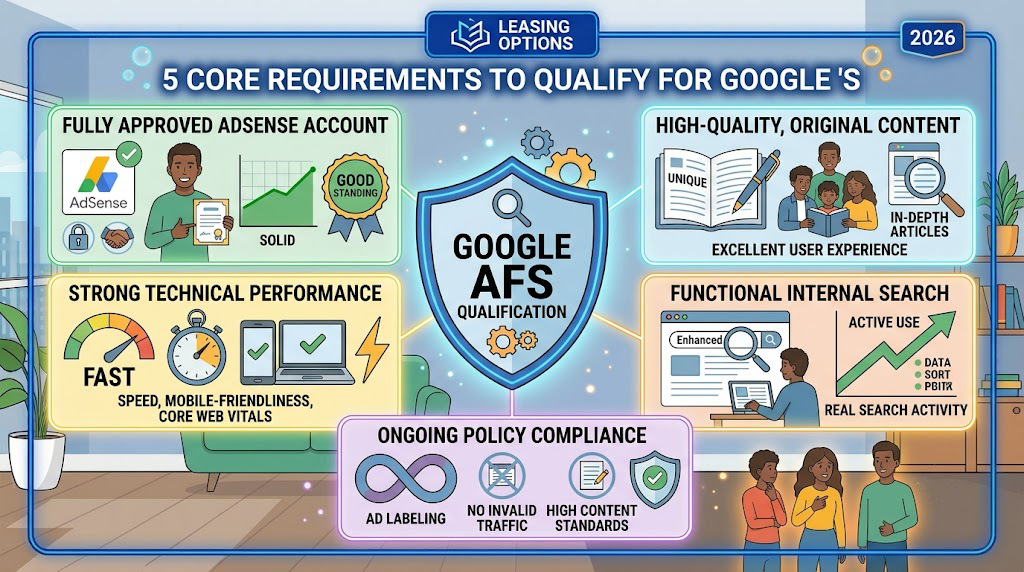
- A fully approved and compliant Google AdSense account
You must have a fully approved and compliant Google AdSense account in good standing. Since AFS is an add-on feature rather than a standalone product, Google evaluates your main AdSense account first. Any recent policy violations, warnings, or performance issues can prevent approval. Maintaining a clean account with consistent compliance demonstrates reliability and significantly increases your chances of qualifying for AdSense for Search.
- High-quality, original content with excellent user experience
Your website needs to feature high-quality, original content that provides real value to visitors. Google looks for well-written, in-depth articles that engage readers rather than thin or duplicated content. A strong focus on user experience — including easy navigation, clear structure, and helpful information — is essential. Sites that prioritize quality content are much more likely to be approved for AFS.
- Strong technical performance (speed, mobile-friendliness)
Technical excellence plays a major role in the approval process. Your website should load quickly, score well on Core Web Vitals, and offer a seamless experience across all devices, especially mobile. Google prioritizes fast, responsive websites because they contribute to better user satisfaction. Poor technical performance can hurt your application, so optimizing speed and mobile compatibility is highly recommended before applying.
- A functional and actively used internal search feature
Google expects your site to have a properly working internal search tool that users actually engage with. A basic or unused search box is not enough. You should implement a robust search system and create content that naturally encourages visitors to use it. Demonstrating real search activity on your site is one of the strongest signals that you are ready for AFS.
- Commitment to ongoing policy compliance
Finally, you must show a clear commitment to ongoing policy compliance. This means following Google’s AdSense rules not just during the application but continuously after approval. This includes proper ad labeling, avoiding invalid traffic, and maintaining high content standards. Google favors publishers who treat compliance as a long-term responsibility rather than a one-time requirement.
How to Qualify for Google AFS: Step-by-Step Process
Qualifying for Google AdSense for Search (AFS) is a systematic process that requires preparation, patience, and attention to detail. While the application itself is relatively simple, success depends on having a strong website and following each step carefully. Below is a complete step-by-step guide to help you qualify for Google AFS in 2026.
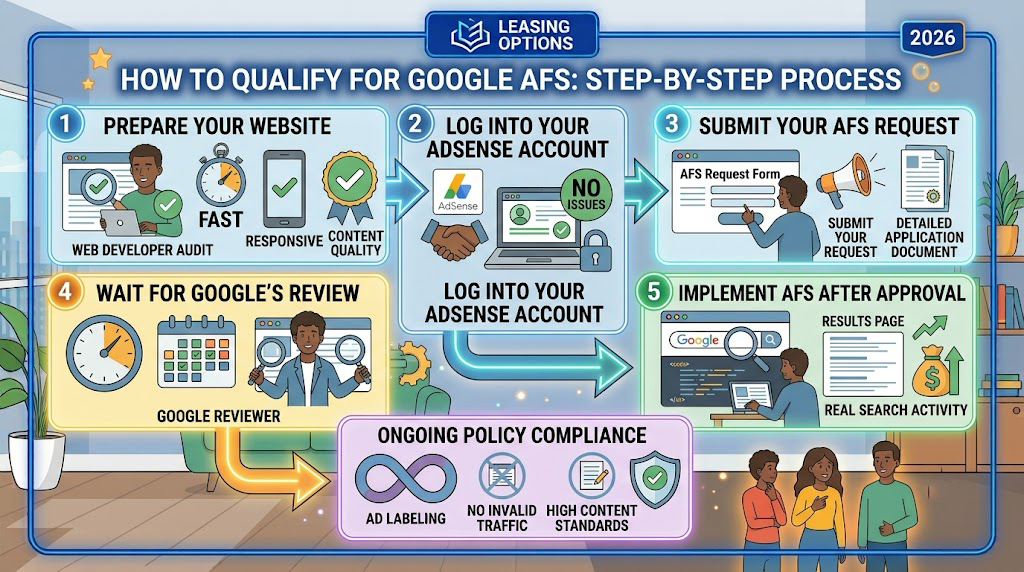
1. Prepare Your Website
Before applying, you should thoroughly audit your site for content quality, loading speed, mobile experience, and overall policy compliance. Google places high importance on user experience, so ensure your content is original, valuable, and well-structured. At the same time, build a robust internal search functionality and create content that naturally encourages users to search — such as comparison guides, FAQ sections, and topic clusters. A well-prepared website not only increases your approval chances but also helps you generate the necessary search impressions after activation.
2. Log into Your AdSense Account
The next step is to log into your existing Google AdSense account and ensure everything is in good standing. Check that your main AdSense for Content account is active, has no unresolved warnings, policy violations, or performance issues. If you find any problems, resolve them first. This step is critical because AFS is an add-on feature, and Google will not approve your request if your primary account has issues.
3. Submit Your AFS Request
Once your account and website are ready, contact your assigned account manager (if you have one) or submit a formal request for AdSense for Search directly through the AdSense dashboard. Be clear and specific about how you plan to use the feature on your site. Providing detailed information and examples of intended implementation can help Google reviewers understand your goals and speed up the approval process.
4. Wait for Google’s Review
After submitting your request, you will need to wait for Google’s review, which typically takes anywhere from several days to a few weeks. The waiting period depends on Google’s current workload and the quality of your application. Use this time productively by continuing to improve your site’s content, optimizing page speed, and enhancing internal search features. These improvements can strengthen your case if Google requests additional information.
5. Implement AFS After Approval
Once you receive approval, it’s time to implement AFS on your website. Add the provided code, carefully place and customize the search box to match your branding, and design the results page for a seamless user experience. After implementation, closely monitor performance through your AdSense reports. Track search impressions, click rates, and revenue to ensure you meet the minimum thresholds required to maintain access.
Final Thoughts
Knowing how to qualify for Google AFS gives you a significant advantage in building a more diversified and profitable ad strategy. With careful preparation and ongoing optimization, AFS can become a reliable income source, especially for sites in high-intent niches.
If you’re ready to take the next step or need support optimizing your site for approval, feel free to reach out to the AdsCollab . We help publishers navigate the AFS process and build stronger monetization strategies in 2026.

